

Most advice on human resources outsourcing starts with the wrong question. Singapore employers do not need a cheaper way to file forms, they need a sturdier way to run people operations when teams are lean, hiring is specialised and compliance is unforgiving. In that setting, outsourcing works best as a capability design choice, not a budget reflex.
Rethinking Human Resources Outsourcing in Singapore
Singapore’s public policy history already points in that direction. A 2014 KPMG HR manpower study found that SMEs often lacked enough HR knowledge and trained personnel, and many were spending almost half their HR time on operational work such as payroll processing, claims administration, recruitment administration and training administration, according to the official factsheet on the HR Shared Services Initiative that SPRING Singapore established in 2015 (source). That initiative was not just about shifting work out of the business, it was about helping smaller employers access HR systems, advisory support and routine administration through shared providers.
The real logic behind outsourcing
That history matters because it frames human resources outsourcing as a structural answer to limited internal bandwidth. When repetitive administration moves out, internal HR and leadership teams can spend more time on talent management, succession planning and workforce design. For founders and HR directors, the practical point is simple, outsourcing should create room for better judgement, not just lower overhead.
Practical rule: if the internal team is spending its day on transactions, it is usually not spending enough time on people strategy.
That is why payroll, employee-data administration and claims handling are often the first functions to leave the in-house queue. They are repeatable, rule-driven and easier to standardise than relationship-heavy work such as role scoping, leadership succession or sensitive employee decision-making. A lean team can still own those strategic calls while an external provider handles the mechanics.
The broader lesson for Singapore employers is that outsourcing is most useful when it helps a business grow without building a large administrative layer from the start. It does not remove accountability, and it should not be treated as a way to step away from HR ownership. It works when the employer keeps the decisions and the provider takes on the routine execution.
Functions Commonly Outsourced by Singapore Employers
Human resources outsourcing in Singapore is rarely an all-or-nothing move. The Chartered Institute of Personnel and Development’s People Profession 2023: Asia-Pacific survey report found that 34% of the Singapore sample for this question reported outsourcing no HR function, while the survey still measured outsourcing across payroll, administrative work, specialist advice, basic and complex employee advice, project management and strategic support (source). That combination tells employers something useful, outsourcing is established, but many companies still keep some or all people work in-house.

Transactional work is usually outsourced first
The first layer usually includes payroll, employee records, claims administration and basic HR operations. These are the tasks that become painful when a small team grows, because they need consistency more than creativity. They are also the functions where process discipline can be documented, checked and repeated.
Strategic work tends to stay in-house longer. Culture decisions, compensation philosophy, final candidate selection and sensitive employee relations are usually too context-specific to hand over completely. Employers often get better results when the external partner supports execution while the business retains final judgement.
A modular model is more realistic than replacement
A modular model matches how Singapore companies operate in practice. Some employers only need payroll support. Others need external help with recruitment administration, project-based hiring or specialist advice. A smaller share will need broader coordination across payroll, onboarding and workforce planning.
The right outsourcing boundary is not where a provider can do the task, it is where the business can safely hand over repeatable work without losing control of the decision.
For growing employers, the advantage of modularity is control. It avoids over-engineering the HR function and it stops the business from paying for services it does not yet need. It also lets the internal team keep its attention on the parts of HR that shape the employee experience and the company’s future hiring quality.
For companies with a lean people function, this means a clear split is usually healthier than a blanket handover. Transactional work can move out. Context, culture and decision rights should stay with the business.
Navigating Payroll Compliance and Statutory Obligations
Payroll outsourcing in Singapore is not mainly an efficiency exercise. It is a compliance-control problem, because payroll touches salary-payment timing, CPF contributions, payslip requirements and IRAS reporting obligations. If the controls are weak, the business inherits the error even when the work is outsourced.
A compliant setup has to account for the Employment Act and MOM’s payslip rules, CPF contribution logic based on employee status, age and wage bands, Skills Development Levy calculations, itemised payslips and IRAS employment-income reporting obligations (MOM, CPF Board, IRAS). For Year of Assessment 2022 onwards, Auto-Inclusion Scheme participation is mandatory for employers with five or more employees, with electronic employment-income reporting due by 1 March each year (source). That makes payroll governance a calendar-and-control discipline, not just a monthly processing task.
The controls that matter
An outsourced provider should not just press a payroll button. The employer should expect a controlled payroll calendar, dual approval for pay-run changes, reconciliations between payroll and the general ledger, exception reports for unusual items and an audit trail for CPF and tax submissions. These controls reduce the chance of incorrect deductions, missed filings and salary disputes.
CPF is a good example of why flat assumptions fail. From 1 January 2026, for Singapore Citizens and Singapore Permanent Residents from the third year onwards earning monthly wages above S$750, the total CPF contribution is 37% for employees aged 55 and below, made up of a 17% employer share and 20% employee share (source). The total falls to 34% for employees above 55 to 60, 25% for those above 60 to 65, 16.5% for those above 65 to 70, and 12.5% for those above 70. Different treatment also applies where monthly wages are S$750 or below, and for first- and second-year permanent residents.
| Employee Age Group | Total Contribution Rate | Employer Share | Employee Share |
|---|---|---|---|
| 55 and below | 37% | 17% | 20% |
| Above 55 to 60 | 34% | 16% | 18% |
| Above 60 to 65 | 25% | 12.5% | 12.5% |
| Above 65 to 70 | 16.5% | 9% | 7.5% |
| Above 70 | 12.5% | 7.5% | 5% |
Practical rule: if a payroll provider cannot show how it handles age bands, residency status and wage thresholds, the employer has not really outsourced compliance, it has outsourced risk.
The bottom line is that payroll outsourcing only works when provider controls are as strong as the employer’s statutory duty is serious. The business remains responsible for accurate records, timely payment and legally correct filings.
Integrating Recruitment and Employment Pass Strategy
One of the most common mistakes in outsourced HR is treating recruitment, salary benchmarking and work-pass planning as separate workstreams. In Singapore, that separation creates risk. A role can be filled in principle, but still fail in practice if the package, job design and pass strategy do not line up before hiring begins.
The Ministry of Manpower currently lists the minimum qualifying salary for new Employment Pass applications in sectors other than financial services as S$5,600, rising progressively with age from age 23 to S$10,700 at age 45 and above (source). For financial-services roles, the current minimum is S$6,200 and rises progressively to S$11,800 at age 45 and above. MOM has also announced that from 1 January 2027, the minimum for new applications will increase to S$6,000 outside financial services and S$6,600 in financial services, with higher age-based maximums of S$11,500 and S$12,700. Those future thresholds apply to renewals of passes expiring from 1 January 2028, so they must not be treated as current rules.
Recruitment needs workforce planning before sourcing starts
That makes role scoping a compliance issue as much as a hiring issue. If a business begins sourcing before it has a salary benchmark, local candidate strategy and pass logic, it can end up with attractive shortlists that are not viable. A more dependable outsourced model connects the role, the compensation band and the candidate profile before the search starts.
Singapore’s recent labour picture makes that even more important. The labour market pressure is visible in the continued demand for scarce talent, and the policy direction clearly rewards employers who think about local pipelines as well as international hiring. In practice, that means specialist recruitment should not sit apart from workforce planning. It needs to be coordinated with documentation, compensation and pass readiness.
Strong hiring support in Singapore does more than source candidates, it checks whether the role can be hired lawfully and sustainably before interviews become expensive.
For employers hiring hard-to-fill specialists, that integrated approach is what prevents wasted effort. It keeps recruitment, compensation and immigration aligned, which matters far more than running each process in isolation.
Choosing the Right Operating Model for Your Growth Stage
The right HR model depends less on headcount and more on complexity. Singapore employers often outgrow a simple payroll arrangement because the business starts hiring across functions, dealing with cross-border coordination or trying to fill specialist roles that need more than transactional support. When that happens, the question is not whether to outsource, but which layer of support fits the stage.
The Singapore Business Federation’s 2024 National Business Survey collected responses from 796 companies, with 82% SMEs and 18% large companies (source). That mix matters because a young employer and a larger operating business need different kinds of HR structure. One may need employment documentation, payroll controls and work-pass coordination. The other may need service-level governance, finance integration and defined escalation paths.
Three tiers that usually show up in practice
Payroll support suits employers that need accuracy, continuity and statutory discipline. It is the right fit when the internal team can still handle hiring and workforce decisions, but not the monthly processing burden.
Embedded recruitment suits businesses with recurring specialist vacancies or hard-to-fill roles. It helps when the company needs external search capacity without building a full internal talent-acquisition function.
Integrated workforce launch support suits firms setting up a Singapore entity or expanding locally. It usually combines hiring coordination, HR setup, onboarding structure and operational support so the business can start with order rather than improvisation.
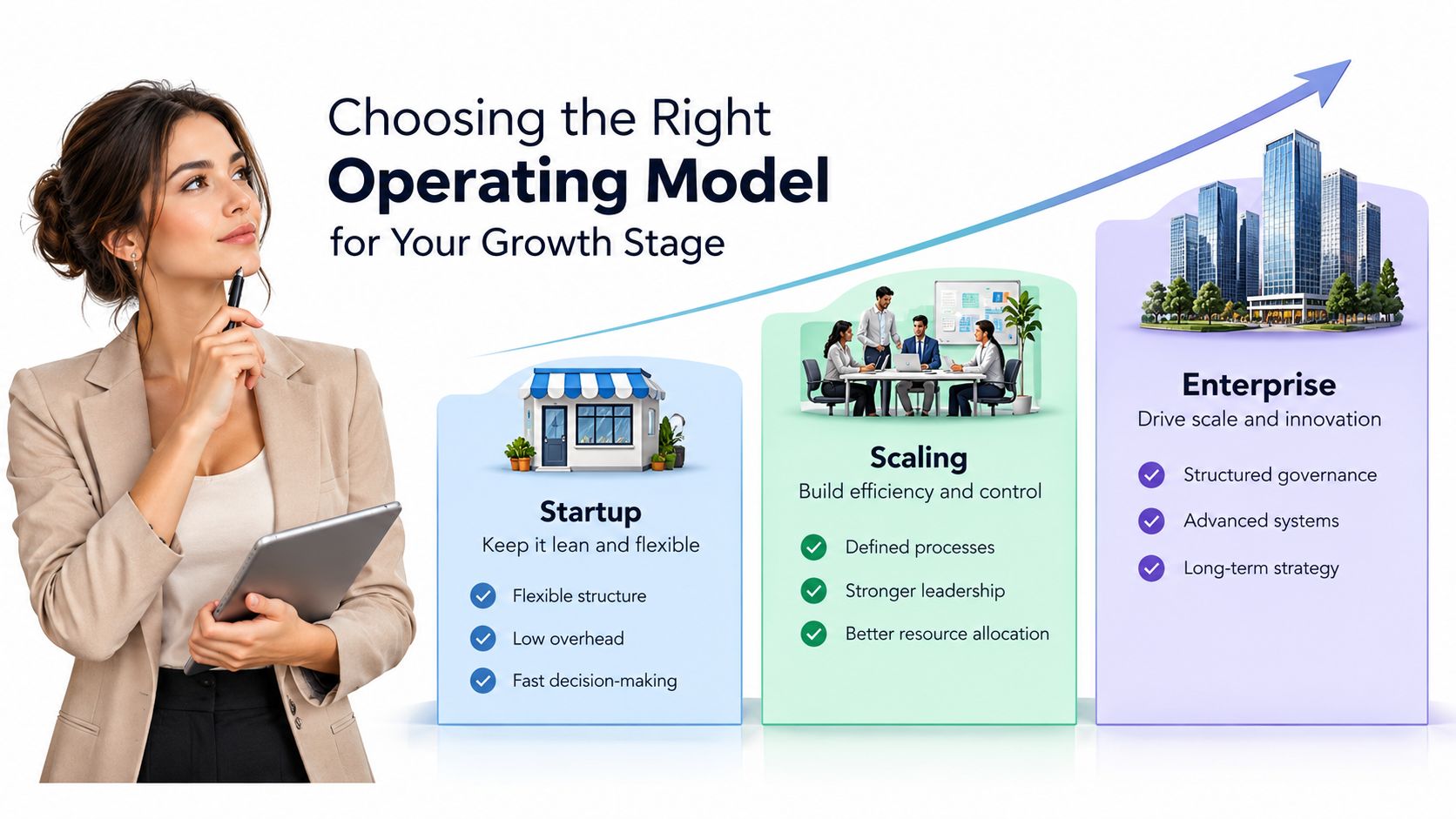
A useful decision test is whether the issue is processing, sourcing or operating model design. If the problem is accurate payroll, the answer is narrow and controlled. If the problem is recurring specialist hiring, the answer needs market mapping and role judgement. If the problem is setting up the people function for a new local operation, the provider has to support the launch itself, not just one transaction at a time.
A sound design separates repeatable tasks from judgement-heavy work. That keeps the company from buying an oversized solution before it needs one, while still giving it the support required to scale cleanly.
Assessing Provider Suitability and Maintaining Governance
Most HR outsourcing guides lead with cost savings, but Singapore employers facing tight labour markets need to assess whether a provider can strengthen execution, compliance, and hiring capacity at the same time. The test is not the fee. It is whether the provider can run Singapore-specific processes correctly, support varied employee profiles, and keep an evidence trail that stands up when someone asks for it later.
A serious review should check rule configuration, contingency planning, and reporting discipline. It should also test whether the team understands Singapore employment practices, CPF logic, payroll timing, and the documentation needed when an audit or query appears. For employers with mixed employee groups, that level of detail matters more than broad service claims.
The employer should keep strategic control over culture, compensation philosophy, and final hiring decisions. Those are business judgments, not administrative chores. The outsourced partner should handle operational cadence, documentation, filing discipline, and the reminders that keep work moving.
Useful governance checks include:
- Defined service levels: clear expectations for turnaround times, deliverables, and escalation paths.
- Process ownership: named owners for approvals, exceptions, and payroll or hiring sign-off.
- Evidence trail: records that show what was submitted, when it was submitted, and who approved it.
- Business continuity: backup procedures if the main contact is unavailable or a cycle needs to be recovered.
- Reporting outputs: reports that let leadership see what happened without chasing the provider for basic updates.
For employers that want a broader overview of service models before defining the in-house boundary, PathSource Consulting’s HR outsourcing solutions page gives a concise view of payroll outsourcing, Employment Pass and work pass coordination, HR setup, and specialist recruitment in Singapore.
A good provider makes HR operations easier to govern, not harder to understand.
For Singapore founders and HR directors, that is the standard. Human resources outsourcing should give the company cleaner execution, clearer compliance, and more room for strategic hiring, without stripping away managerial control.