

A new Singapore entity can have payroll looking deceptively simple: a small team, fixed monthly salaries and one person in finance who also handles HR. Then an overtime claim arrives after the attendance data has been approved, a variable-pay decision sits in someone’s inbox, and the person preparing payroll has to decide what to include before the salary deadline. The calculation is only one part of the problem. The business also needs clear approvals, reliable employee data and a record of who checked the final figures.
That’s why payroll services in Singapore should be treated as a cross-functional control process, not just a monthly bank transfer. HR or operations supplies accurate employee and attendance data, managers approve variable pay, finance checks the funding and payment file, and an authorised person reviews the payroll output. Outsourcing can organise the processing, but it doesn’t decide who inside the company owns those inputs and approvals.
Why Singapore Payroll Stops Being a Monthly Calculation
Consider a young company with a lean team. Its finance manager handles HR administration as well as accounts, and the founders approve pay changes between meetings. Attendance is closed, but overtime hasn’t been approved in the system. Payroll is prepared using the information available, while the unresolved claim sits in a separate message thread.
The practical risk isn’t just an incorrect line on a payslip. If people, finance and operations work from different records, a late change can affect the calculation, the payment file and the statutory records that follow. Employees may question why approved hours weren’t paid, and the team then has to reconstruct decisions that should have been captured before payroll closed.
In Singapore, salary payment and overtime payment have distinct statutory timelines, while CPF calculations depend on employee and wage details. Those obligations turn routine processing into a sequence of linked controls. A missing approval or outdated employee record can move from an HR issue to a payroll correction and, eventually, a compliance concern.
Three disciplines, one outcome
A dependable payroll operation coordinates monthly processing, salary disbursement and statutory obligations. Processing turns approved inputs into gross-to-net pay and payslips. Disbursement moves the approved amount to employees on time. Statutory work handles the applicable calculations, submissions, records and annual reporting.
Each discipline needs an owner, and the hand-offs need to be explicit. A provider may calculate pay, but the employer still needs to supply complete data, approve changes and monitor whether the agreed process was followed.
Practical rule: If nobody can say who approves overtime, who signs off the payroll report and who confirms payment, the process isn’t controlled, even if the software produces a polished payslip.
That is the decision behind outsourcing or keeping payroll in-house. The question isn’t whether a provider or system can run the numbers. It’s whether the company has assigned responsibility for the information and decisions that make those numbers reliable.
How a Singapore Monthly Payroll Cycle Actually Works
A pay run works best as a controlled sequence with internal cut-offs. The statutory deadline is the outer boundary, not a sensible target for collecting attendance or chasing approvals.
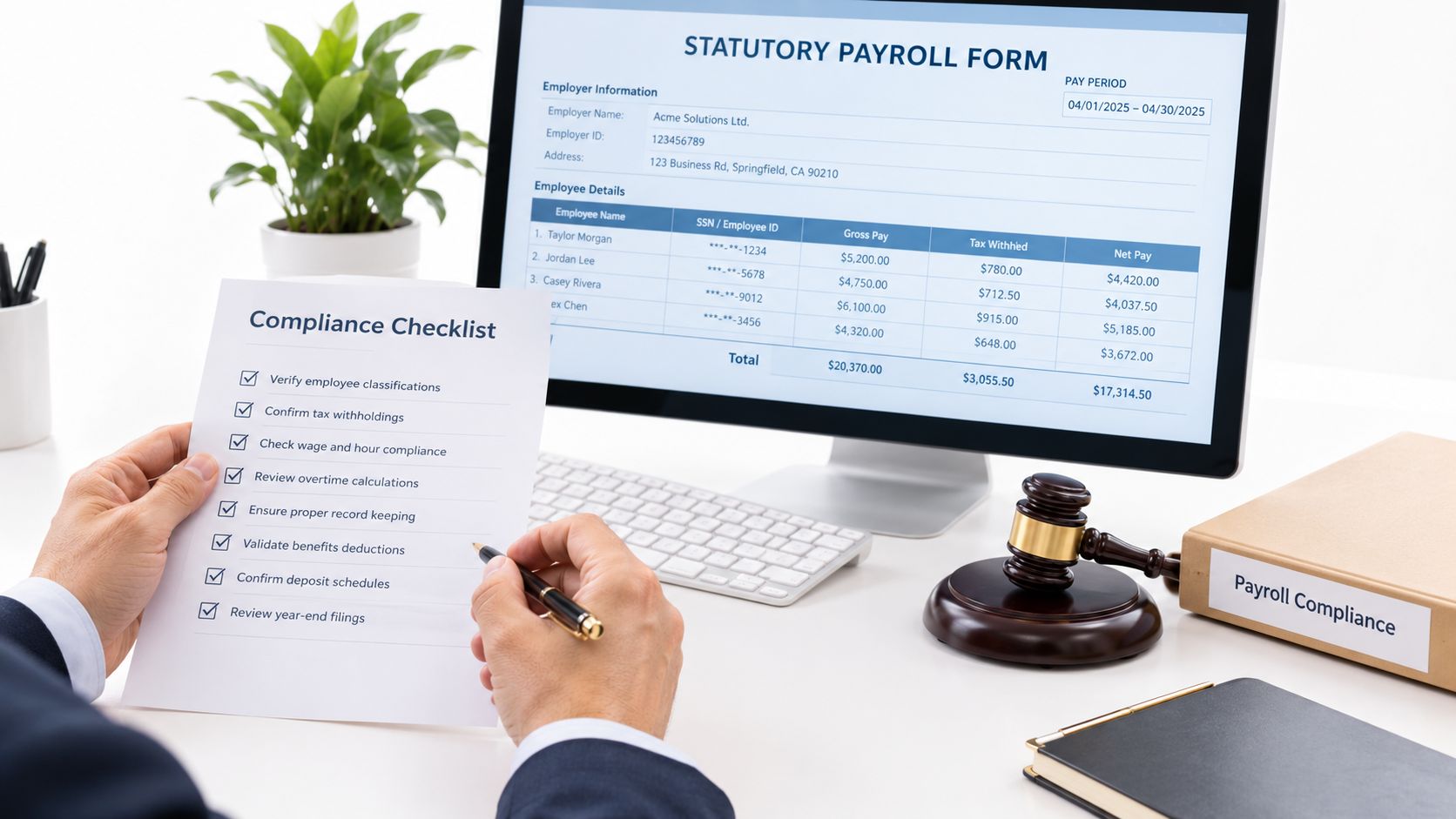
Close inputs before calculating pay
Start with the salary-period end date and set an internal deadline for attendance, leave, claims, commissions and overtime. Managers should approve variable pay through a recorded workflow, not through informal messages that payroll staff may miss. HR or operations should also flag joiners, leavers, salary changes and unpaid leave before calculation begins.
Once the inputs are complete, payroll can calculate gross pay, deductions and net pay. The reviewer should check exceptions rather than merely approve a total: a large change from the prior pay period, a missing bank detail or an unusual deduction deserves a clear explanation. The employer should also generate itemised payslips with the required salary information.
Separate approval from payment release
Finance should reconcile the approved payroll report against the payment file before release. The person releasing funds should work from the approved version, while a separate reviewer confirms that the payment result matches the payroll instruction. After payment, retain confirmation and resolve rejected or returned transfers promptly.
A clean payroll run starts with a clean hand-off. A payroll processor can’t reliably approve information that the company hasn’t supplied or authorised.
The operating rhythm should therefore include early input closure, calculation and review, payment release, payslip delivery and post-payment reconciliation. When those milestones have named owners, month-end stops depending on one person remembering every loose end.
Statutory Obligations That Shape Every Pay Run
A payroll file can be accurate and still be late if the team approves it on the wrong timetable. Employers covered by the Employment Act must pay salary at least once a month, generally within 7 days after the salary period ends. Overtime pay has its own deadline, generally within 14 days after the relevant salary period ends. Employers covered by the Act must also issue itemised payslips, a requirement in force since 1 April 2016, under the Ministry of Manpower’s salary-payment rules.

Let deadlines shape the workflow
Work backwards from each statutory deadline. Set dates for closing attendance, approving overtime and locking the payroll file, with enough time to resolve exceptions before payment is due. Record the salary-period end date, and keep ordinary salary and overtime on separate approval tracks. That separation makes it easier to see whether each item is authorised and due on time.
Build controls around the actual obligations
Assign an owner to each check, even when a provider processes the payroll. The employer remains accountable for supplying accurate information, authorising pay and meeting statutory duties. A provider can calculate and prepare records, but it cannot approve an employee’s overtime or confirm that the company’s inputs are correct.
- Salary timing: Confirm the salary period and payment deadline before the run begins.
- Overtime: Require approval and track it separately from ordinary salary against its own deadline.
- Payslips: Check that each itemised payslip reflects approved pay components and deductions.
- CPF and records: Validate employee details and wage treatment, then retain the required statutory records.
Pay elements also need distinct treatment in the payroll setup. Configure ordinary salary, overtime and allowances separately, then check each element’s deadline and CPF treatment before the file is locked. This gives HR and finance a clear review point when variable pay changes, rather than leaving the provider to interpret a combined figure.
CPF rates vary by age and employee status, so the payroll process must not apply one rate to everyone. Keep the detailed rate calculation in the employee-level checks that follow. The control here is to confirm that the right employee information and pay elements reach that calculation, and that a named reviewer catches errors before submission.
Calculating CPF the Right Way
CPF is not a flat deduction applied identically to every employee. From 1 January 2026, for Singapore citizens and Singapore Permanent Residents from their third year onward who earn more than S$750 a month, the total rate for employees aged 55 and below is 37% of wages: 17% from the employer and 20% from the employee’s salary. The CPF Board’s contribution table sets out the age-banded rates and conditions.
For the same eligible group and wage level, the total rate is 34% for employees above 55 to 60, split between 16% employer and 18% employee. It is 25% for those above 60 to 65, with each share at 12.5%; 16.5% for those above 65 to 70, comprising 9% employer and 7.5% employee; and 12.5% above 70, comprising 7.5% employer and 5% employee.
Check the employee record before the rate
A sound CPF workflow validates the variables that determine treatment before a payroll calculation is approved:
- Confirm status and residency history. Check whether the employee is a Singapore citizen or permanent resident and, for permanent residents, the relevant residency year.
- Verify age. Apply the correct age band for the payroll calculation rather than carrying forward a previous rate without review.
- Check the wage band. The rates above apply to wages over S$750; lower bands use different treatment.
- Apply wage ceilings. Review the applicable Ordinary Wage and Additional Wage ceilings for the employee’s pay components.
For monthly wages above S$50 but not exceeding S$500, the employer pays its share, while there is no employee CPF share. For wages above S$500 but not exceeding S$750, CPF uses a graduated calculation rather than the full rate. Wages of S$50 or less attract no contribution under the stated table. The CPF Board’s 2026 contribution-rate details also set out these lower wage bands and the remittance timing.
The Ordinary Wage ceiling rose to S$8,000 from January 2026, so higher-paid employees may be affected by the ceiling as well as the rate. A reviewer should test the treatment of ordinary and additional wages, not just the contribution percentage. The useful control is an employee-level exception report showing status, age band, wage basis and any manual adjustment before the payroll is released.
Year-End Reporting Through AIS and IR8A
Monthly payroll records become annual employment-income reporting, so year-end preparation shouldn’t begin when the filing deadline is close. Employers must prepare Form IR8A and, where applicable, Appendix 8A and Appendix 8B for employees employed in Singapore by 1 March of the year after the income was earned. Form IR8S is no longer required from YA2026 onwards. IRAS explains the current requirements on its official Reporting Employee Earnings page.
Employers covered by the Auto-Inclusion Scheme must submit employment-income records electronically to IRAS by 1 March. Employers that are not on AIS generally provide the required forms to employees by 1 March, so the employees can complete their own tax filing. The submission or form set needs to reconcile with the employment income recorded during the year, including reportable pay and benefits. If the monthly ledger, finance records and HR information don’t agree, year-end reporting can become a data-reconstruction exercise rather than a controlled close.
Reconcile before submission
A practical year-end control is an exception report that compares the payroll ledger with CPF-submitted wages and finance records. It should flag:
- Employee movements: Joiners and leavers whose pay or employment dates need checking.
- Pay adjustments: Bonuses, retrospective salary changes and other corrections.
- Absences and benefits: Unpaid leave and taxable benefits that may not sit in the regular salary fields.
- Unmatched totals: Differences between payroll, CPF submissions and the finance ledger that need an owner and explanation.
The report is only useful if HR, finance and payroll agree who resolves each exception. A person should own the data correction, another should review the final reconciliation, and an authorised officer should approve the submission or employee form pack.
For employers that want support with this annual layer, PathSource’s Auto-Inclusion Scheme employer guide sits alongside the monthly payroll process. The important test is whether year-end information can be traced back to approved source records, not whether a file can be uploaded before the deadline.
Choosing a Payroll Provider in Singapore
A provider should be assessed against the company’s actual payroll workload and internal capability. A lean team with fixed monthly salaries may need a different arrangement from a business with frequent variable pay or expansion plans. The useful comparison is not a vendor’s feature list. It’s whether the provider can handle the work the employer will hand over, and whether both sides understand what remains with the employer.
| Criterion | What to look for | Common red flag |
|---|---|---|
| Service scope | Clear responsibility for salary inputs, gross-to-net calculations, payslips, CPF support, payment coordination and reporting | The proposal says “full service” but doesn’t define approvals or exclusions |
| Technology and integrations | A reliable way to exchange employee, attendance and pay data with the company’s existing records | Manual re-keying without a documented review |
| Compliance depth | A process for checking changing employee details, wage treatment, deadlines and statutory outputs | Compliance is described as an automated feature with no human review or escalation path |
| Onboarding and implementation | A structured data-collection process, testing and agreed sign-off before go-live | The provider expects the first live run to reveal missing information |
| Commercial fit | Transparent fees, clear treatment of corrections and a defined service scope | Charges or responsibilities are unclear until an exception occurs |
| Expansion support | Capacity to support the employer’s Singapore team as its pay components and HR processes develop | The provider can’t explain how it handles new employee types or changing requirements |
Ask about the hand-offs
During a provider discussion, ask who receives attendance and variable-pay data, who checks changes to employee records, who approves the payroll report, and who releases salary. Then ask how the provider reports a missed input or a discrepancy. A good operating model makes those hand-offs visible before a problem occurs.
Outsourcing doesn’t transfer employer accountability. It changes who performs specified tasks. If the employer doesn’t assign internal owners for approvals, funding and final review, the arrangement can create a gap between what the provider processed and what the business intended.
PathSource’s payroll outsourcing service covers monthly payroll processing, salary disbursement coordination and support with statutory payroll obligations. Employers should still compare any proposed arrangement against the same scope-and-ownership checklist before signing.
Implementing Payroll in the First 90 Days
A new payroll process should be built around trustworthy data and clear approvals, not around the first available software configuration. The early work is administrative, but it determines whether the first live run is a controlled test or a rushed correction exercise.
Set up the records and workflow
Begin by gathering employee master data and checking that names, employment details, bank information and relevant CPF and IRAS records are complete. HR should confirm employee status and pay terms; managers should identify who approves attendance, overtime, commissions and other variable pay. Finance should confirm who checks funding and releases salary.
Next, configure pay components and approval steps. Record who can submit a change, who can approve it and who can see the final payroll report. Keep responsibilities separate where the team allows it, so the person entering a change isn’t automatically the only person approving its effect.
A first payroll run should test the process, not just the arithmetic.
Before going live, run a parallel calculation and compare its results with the company’s approved employment terms and source records. Investigate every difference, document the correction and obtain sign-off before using the process for an actual payment. The dry run also tests whether attendance closes on time and whether managers understand their approval responsibilities.
Review after go-live
After the initial run, check that salary release matched the approved file, payslips were issued and statutory records can be reconciled. Use discrepancies to improve the workflow, rather than relying on one person to remember corrections next month.
For companies establishing operations in Singapore, PathSource’s HR setup support for foreign companies can sit alongside payroll planning. The employer should still appoint internal owners for employee data, pay approvals and payment release, even if an external provider handles processing.
The signs of a working process are operational: inputs arrive on schedule, exceptions have named owners, salary is released on time, CPF submissions reconcile, and year-end employment-income records can be checked against the payroll ledger without rebuilding the data.
Putting the Pieces Together for HR, Finance and Operations Leaders
Payroll works when three disciplines stay connected: monthly processing, salary disbursement and statutory compliance. HR and operations maintain accurate employee and time data. Managers approve variable pay. Finance checks the payroll output, confirms funding and controls payment release. A provider can perform agreed calculations and submissions, but the employer needs to retain ownership of decisions and review.
Before signing with a provider, confirm the service scope, data hand-offs, approval roles, correction process, records access and year-end reporting responsibilities. After go-live, monitor whether the inputs arrive on time, exceptions are resolved, payments match the approved file and statutory records reconcile. Don’t leave those checks as informal tasks assigned to whoever happens to be available.
The practical distinction is simple: outsourcing transfers work, not accountability. Employers that treat the provider relationship as a defined division of responsibilities are better placed to spot gaps before they become employee disputes or compliance problems.
PathSource Consulting supports Singapore employers with payroll outsourcing, including monthly payroll processing, salary disbursement coordination and statutory payroll support. Visit PathSource Consulting to discuss the payroll support your team needs.